Adult Toy Comparisons
App-Controlled vs Remote-Control Sex Toys: 7 Key Differences
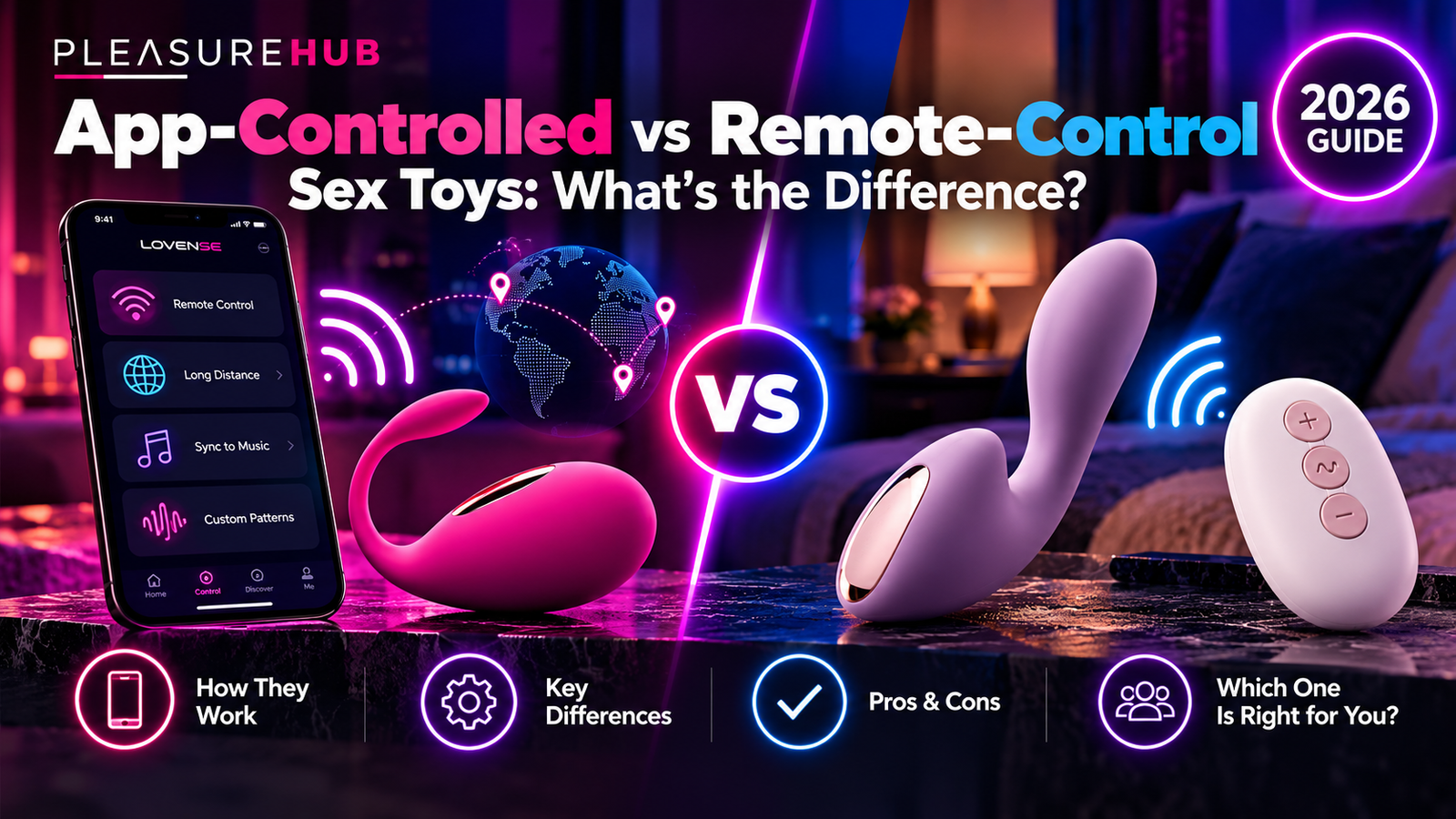
The app-controlled vs remote-control sex toys choice is mainly about how you want to control the toy: through a smartphone and connected features, or through a simpler dedicated physical remote.
The terms overlap, so this comparison needs one important definition. An app-controlled toy is technically a type of remote-controlled toy. Here, remote-control toy means a model operated with a dedicated handheld remote, while app-controlled toy means a model that connects to a smartphone app.
Quick Answer
App Control vs Physical Remote: Which Is Better?
Choose app control if you want long-distance partner control, custom patterns and connected features. Choose a physical remote if you want fast, simple control nearby without depending on a phone. Some toys support both, so the two categories are not mutually exclusive.
App-Controlled vs Remote-Control Sex Toys Guide
App-Controlled vs Remote-Control Sex Toys: 7 Differences
| Feature | App-Controlled | Physical Remote |
|---|---|---|
| 1. Controller | Smartphone or supported computer/app | Dedicated handheld remote |
| 2. Nearby connection | Usually Bluetooth between toy and phone | Wireless link between toy and remote |
| 3. Long-distance use | Supported apps can extend partner control over the internet | Usually intended for nearby control |
| 4. Setup | App install, pairing and permissions may be required | Usually simpler pairing or ready-to-use remote |
| 5. Customization | Often offers custom patterns, intensity control and extra modes | Usually buttons for preset modes/intensity |
| 6. Phone dependence | Phone/app required for app-specific features | No phone needed for remote operation |
| 7. Best use case | Connected, customizable and long-distance play | Simple nearby solo or partner control |
“Remote-controlled” can describe any toy controlled away from its onboard buttons—including app-controlled toys. In this guide, we use “physical remote” for the dedicated handheld controller so the comparison stays clear.
How Do App-Controlled Sex Toys Work?
Most app-controlled toys first connect to a nearby phone using Bluetooth. The manufacturer’s app then becomes the controller. Lovense says its Remote app can control connected toys locally through Bluetooth and can extend partner control over the internet when both users are connected.
We-Vibe similarly says its app pairs to compatible toys over Bluetooth for nearby operation, while its partner feature can enable control over greater distances through an internet connection.
The phone communicates directly with the toy when it is within supported Bluetooth range.
On supported platforms, the toy stays connected to the local phone while the app carries a partner’s commands over the internet.
Apps can add custom patterns, music/sound modes, saved settings and other features beyond simple buttons.
You may need an account, Bluetooth permissions, pairing and an internet connection for partner features.
How Do Physical Remote-Control Sex Toys Work?
A physical remote gives you a separate handheld controller instead of making your phone the main interface. Depending on the product, buttons on the remote change intensity, patterns or modes while the toy remains nearby.
This can be more convenient when you do not want to unlock a phone, open an app or navigate a touchscreen during use. We-Vibe confirms that compatible products can be operated with onboard buttons or an included remote without using its app.
Which Works Over Longer Distances?
App control wins for true long-distance use when the product and app support internet partner control. Lovense states that a partner can control a connected toy from anywhere with a stable internet connection, and We-Vibe documents remote partner connection through its app. For the full connection chain, see How Do Long-Distance Sex Toys Work?.
A dedicated physical remote is primarily useful for nearby control. Its exact operating range varies by product, environment and manufacturer, so do not assume every physical remote has the same range.
For app-controlled long-distance play, the toy is normally connected locally to the user’s phone. The internet then carries control between users. The toy is not maintaining a direct Bluetooth connection across cities or countries.
App-Controlled vs Physical Remote: Pros and Cons
| Advantages | Trade-offs | |
|---|---|---|
| App-Controlled | Long-distance potential; custom patterns; more control modes; partner features; software updates/features | More setup; phone/app dependence; permissions and connectivity can matter |
| Physical Remote | Fast; tactile buttons; no phone required; easy to hand to a nearby partner | Usually fewer advanced features; generally designed for nearby rather than internet-distance control |
Which One Should You Choose?
You want long-distance partner play, custom patterns, interactive modes or more control options.
You mainly play in the same room and want simple tactile control without reaching for a phone.
Prioritize a proven app ecosystem and internet partner-control support rather than merely seeing “Bluetooth” on the product page.
Look for a model that explicitly includes a physical remote and also supports the manufacturer’s app.
Want More Connected-Toy Guides?
Learn how connected toys work or compare our current remote-control picks.
8 Examples: 4 App-Controlled vs 4 Physical Remote / Hybrid Toys
To keep the comparison balanced, these examples cover four app-focused toys and four toys with physical-remote or hybrid control. They also span wearable, wand, anal, male and couples formats, showing that the control method is separate from the type of toy.
4 App-Controlled Examples
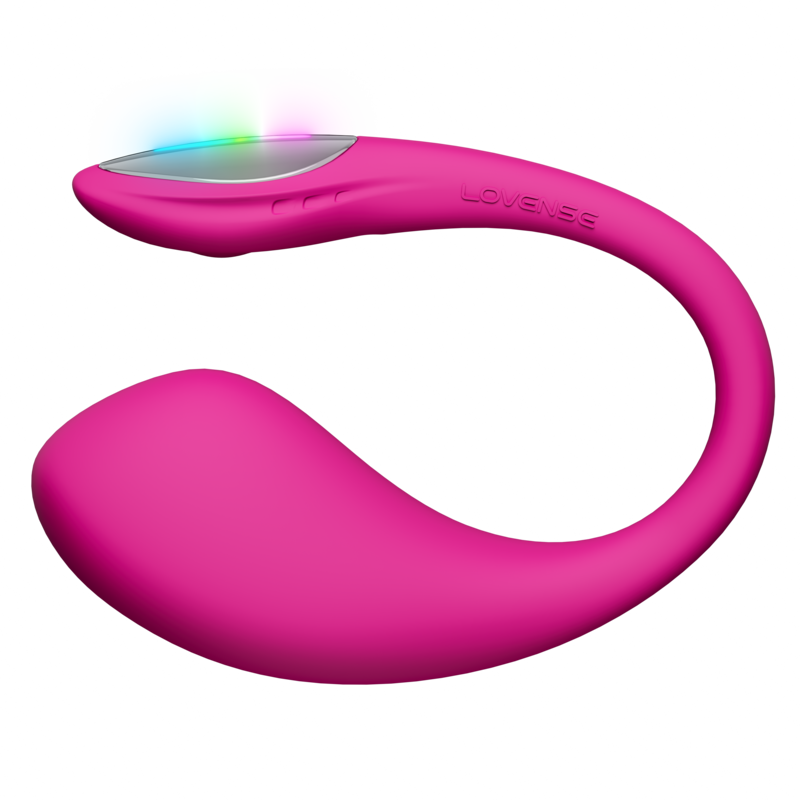
Lovense Lush 4
Lovense
Lush 4 is a strong example of an app-focused wearable. Lovense Remote provides nearby Bluetooth control and supported internet-based partner control for long-distance use.
A useful example for users who want discreet wearable control plus connected partner features. Compare more wearable formats in Best Wearable Vibrators 2026.
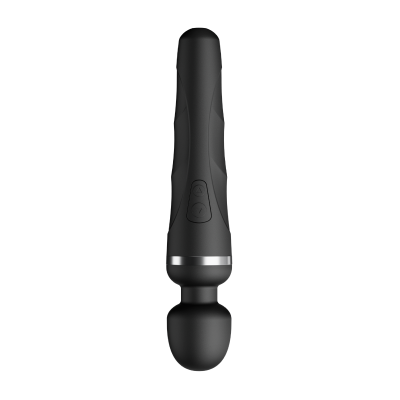
Lovense Domi 2
Lovense
Domi 2 shows that app control is not limited to wearable toys. It brings the Lovense connected-control system to a compact wand format.
It demonstrates how the same app ecosystem can work across a very different physical toy format. For more wand options, see Best Wand Vibrators 2026.
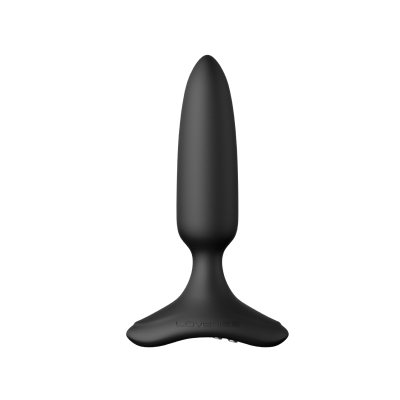
Lovense Hush 2
Lovense
Hush 2 extends app-based control into an anal-toy format, giving this side of the comparison a broader use-case perspective than vibrators alone.
This is a good example of app control being a control technology rather than a single product category. If you are new to anal toys, see Best Anal Toys for Beginners 2026.
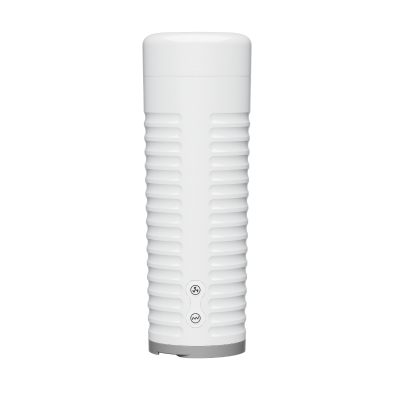
Lovense Max 2
Lovense
Max 2 adds a male-focused example to the app-controlled side and can be used through the same Lovense connected ecosystem as other compatible products.
It broadens the comparison beyond female-focused wearables and shows how app control can span different users and formats.
4 Physical Remote / Hybrid-Control Examples
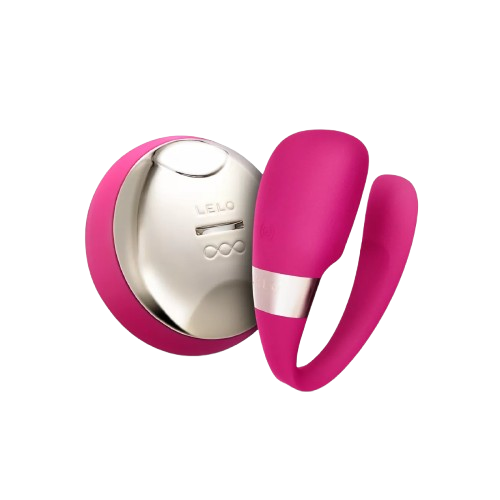
LELO TIANI 3
LELO
TIANI 3 represents the dedicated-remote approach: a couples toy designed around nearby wireless control without making a smartphone the center of the experience.
This approach suits users who value immediate tactile control more than internet-based features.
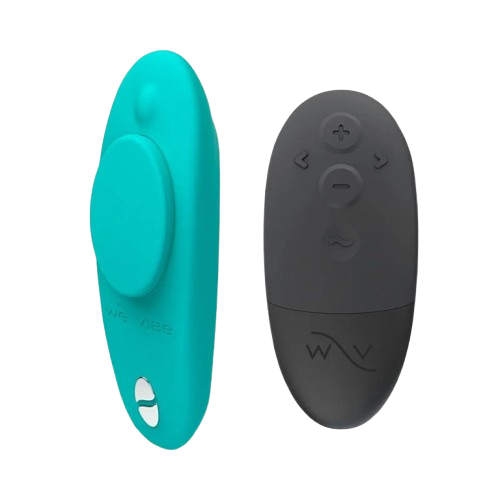
We-Vibe Moxie+
We-Vibe
Moxie+ demonstrates the overlap between the two categories by combining wearable convenience with multiple control possibilities in the We-Vibe ecosystem.
A hybrid-control model can preserve simple nearby operation while also offering connected features when desired.
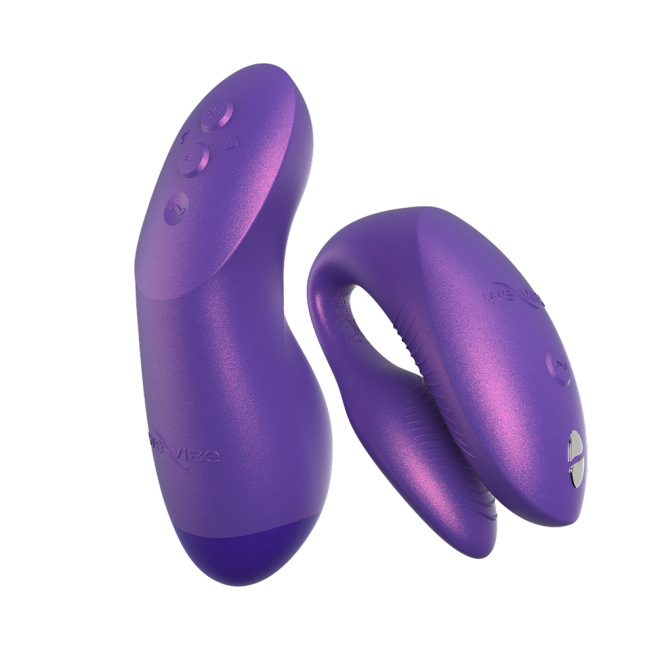
We-Vibe Chorus Pro
We-Vibe
Chorus Pro adds a couples-focused hybrid example, useful for comparing straightforward partner control with the extra options available through connected software.
It shows why buyers should check the actual control methods rather than treating “remote” and “app” as mutually exclusive labels.
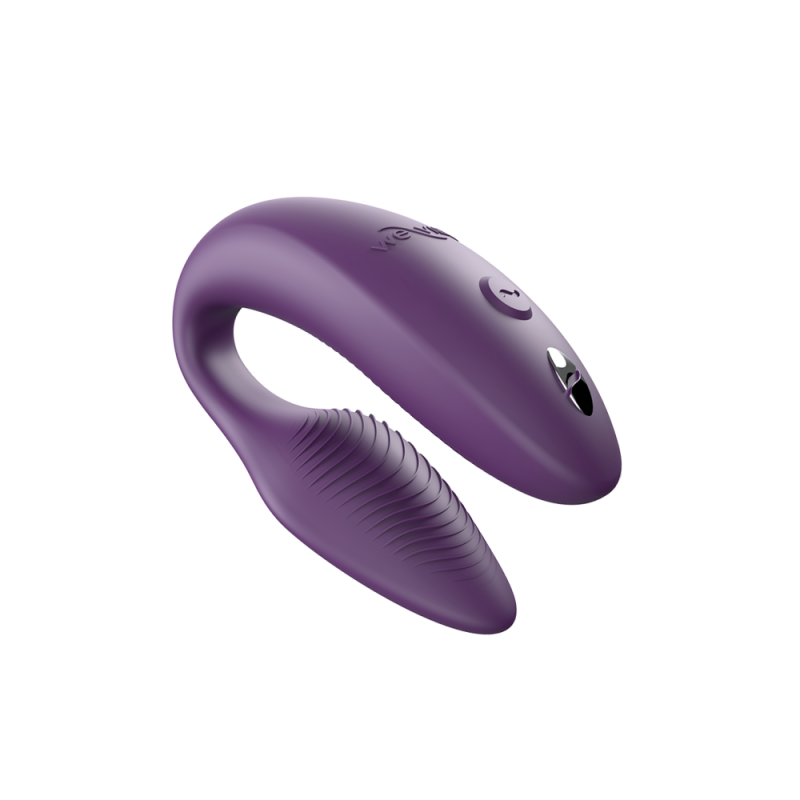
We-Vibe Sync 2
We-Vibe
Sync 2 provides another couples-oriented example where buyers can value simple nearby control while still having access to connected functionality through the wider We-Vibe ecosystem.
Together with TIANI 3, Moxie+ and Chorus Pro, it gives the physical-remote/hybrid side enough variety for a balanced comparison.
Can a Sex Toy Be Both App-Controlled and Remote-Controlled?
Yes. This is the biggest reason the terminology can be confusing. A product may have onboard buttons, a dedicated physical remote and app support. We-Vibe explicitly documents these as separate control options across compatible products.
So do not shop by the label alone. Check the product page for the exact control methods included and whether app-based partner control works over the internet.
A toy can have a Bluetooth app without supporting internet partner control. For long-distance use, verify that the manufacturer’s app specifically supports remote partner sessions over the internet.
What About Privacy and Connectivity?
App-controlled toys add software, accounts, permissions and network connectivity to the experience. Review the manufacturer’s current privacy information and only grant permissions required for features you actually use. Physical remote operation generally avoids the need for an app account when the product supports standalone remote control.
Connectivity can also affect reliability. A physical remote avoids dependence on mobile data or Wi-Fi for nearby use, while long-distance app sessions depend on the toy-to-phone connection plus a stable internet connection. Lovense explicitly requires a stable internet connection for its long-distance Live Control feature.
App-Controlled vs Remote-Control Sex Toys FAQ
Are app-controlled and remote-controlled sex toys the same?
They overlap. An app-controlled toy is remotely controlled through software, while a product described as remote-controlled may use a dedicated physical remote, an app or both. In this guide, “physical remote” means a separate handheld controller.
Do app-controlled sex toys work from anywhere?
Only when the product’s app specifically supports internet-based partner control. Lovense Remote, for example, supports long-distance control with a stable internet connection. Bluetooth alone is a local wireless connection.
Do physical remote-control toys need Wi-Fi?
Typically not for ordinary nearby remote operation, but always check the individual product instructions. Internet access becomes relevant when using app-based online features.
Which is easier to use?
A dedicated physical remote is usually simpler because it provides tactile buttons without an app. App control takes more setup but can provide substantially more customization and connected features.
Which is better for long-distance couples?
An app-controlled toy with verified internet partner-control support is the better fit. A standard handheld remote is generally designed for nearby control.
Can I use an app-controlled toy without my phone?
That depends on the product. Many connected toys also have onboard buttons, and some include a physical remote. Check the specific model’s supported control methods.
How PleasureHub Compared These Control Methods
We reviewed current Lovense and We-Vibe documentation for Bluetooth pairing, local control, internet partner control, physical remote operation and app features. This is a research-based editorial comparison and does not claim personal hands-on testing.